
Gut Microbe Spotlight: Akkermansia Muciniphila
Akkermansia muciniphila has gained considerable scientific attention in recent years due to its associations with metabolic health, gut barrier function and immune regulation
First identified in 2004 by Dutch researchers, it was named after microbiologist Antoon Akkermans and its ability to utilise mucin — a glycoprotein-rich substance that forms much of the protective mucus layer lining the intestinal tract.
Interest in Akkermansia has grown alongside advances in microbiome sequencing technologies, which have enabled researchers to better understand the vast microbial communities living within the human gut.
What Is Akkermansia muciniphila?
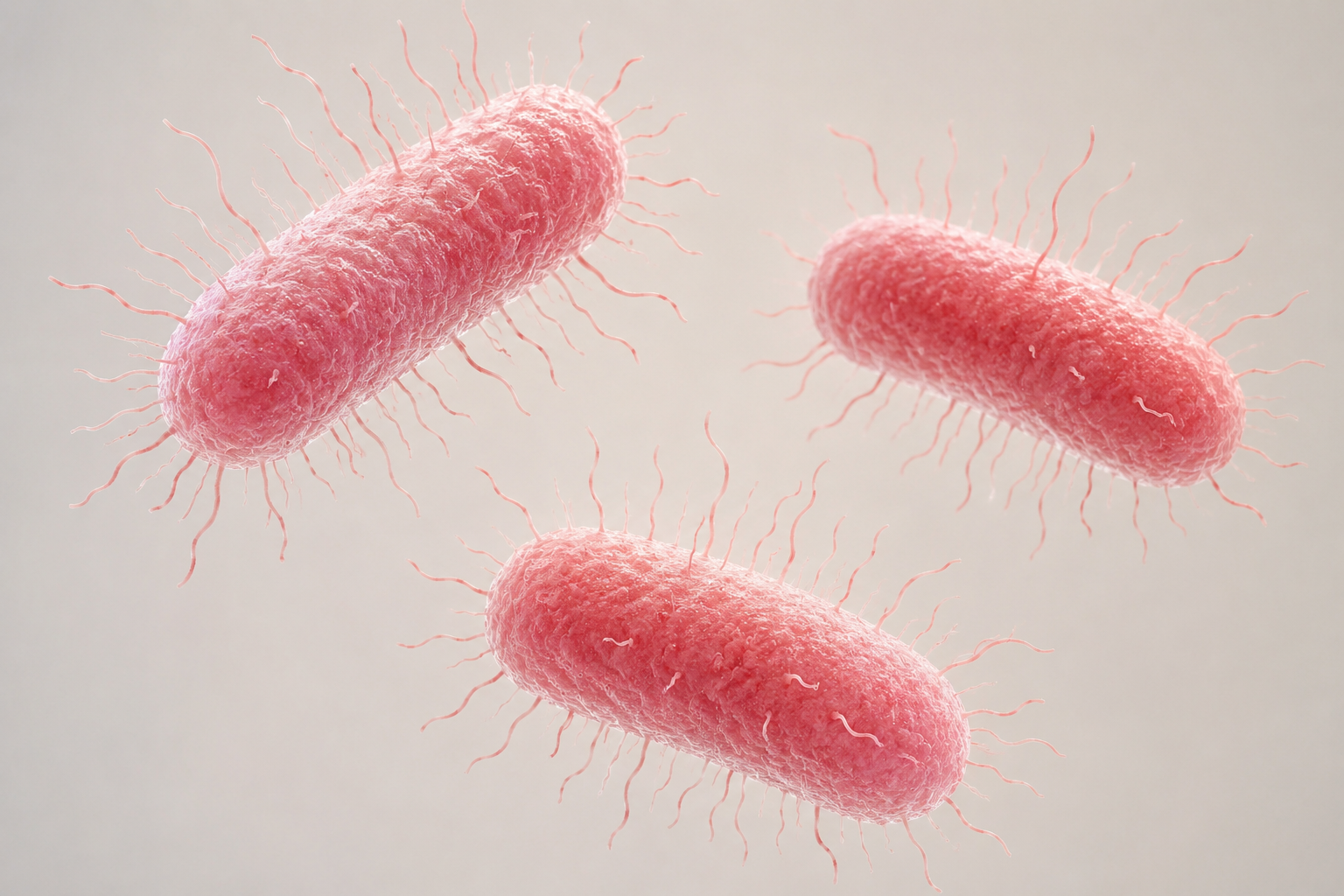
Akkermansia muciniphila is a mucin-degrading bacterium belonging to the phylum Verrucomicrobiota. It is commonly found within the mucus layer lining the human intestine, where it utilises mucin as a primary fuel source.
The mucus layer acts as an important protective barrier between the trillions of microbes living within the gut and the intestinal wall itself. It helps protect intestinal tissues from mechanical damage, pathogens and toxins, supports immune function, and provides a specialised habitat for many beneficial microbes. Under healthy conditions, this mucus layer is continuously produced and renewed.
Researchers believe Akkermansia may play an important role in this dynamic process, potentially supporting mucus turnover, gut barrier integrity and communication between the gut microbiome and the immune system.
Why Has Akkermansia Attracted So Much Scientific Interest?
Research has consistently found associations between higher levels of Akkermansia and several markers of metabolic health, including:
• Improved insulin sensitivity
• Healthier glucose regulation
• Lower levels of visceral adiposity
• Healthier body weight
• Improved gut barrier function
• Reduced markers of inflammation in some studies
• Greater overall microbiome diversity
As with most areas of microbiome science, it is likely that the broader microbial environment, dietary pattern, lifestyle factors and host physiology are more important than the abundance of any single microbe alone, but these associations with Akkermansia and a host of potential health benefits are hard to overlook.
Many of the health outcomes associated with Akkermansia overlap with the key features of metabolic syndrome, including insulin resistance, abdominal adiposity and impaired glucose regulation. To learn more about metabolic health, read my article Metabolic Syndrome: Why It Matters & How to Reduce Your Risk Factors.
How Might Akkermansia Be Supporting Metabolic Health?
Improved gut barrier integrity is thought to be one important pathway, potentially helping to reduce the movement of inflammatory compounds such as lipopolysaccharide (LPS) into the bloodstream, which may help reduce low-grade systemic inflammation associated with insulin resistance and metabolic dysfunction. Akkermansia has also been associated with improved insulin sensitivity, glucose regulation, and favourable effects on appetite-regulating hormones including GLP-1 and PYY in pre-clinical studies. In addition, it may support beneficial microbial metabolites through interactions with other gut microbes, contributing to a healthier metabolically protective gut environmen.
What Happens When It’s Absent or Low?
Lower levels of Akkermansia have been reported in some studies involving:
• Obesity
• Insulin resistance
• Type 2 diabetes
• Metabolic syndrome
• Non-alcoholic fatty liver disease (NAFLD)
• Inflammatory bowel disease (IBD)
• Certain inflammatory conditions
These findings are observational and don’t mean that low or missing Akkermansia is the sole cause of these conditions, but a potential contributing factor in some instances. These consistent associations have contributed to growing scientific interest in its potential role within the broader gut ecosystem and its relationship with metabolic health.
Can Akkermansia Ever Be Too High?
While Akkermansia is often associated with favourable health outcomes, higher levels are not always straightforward to interpret. Some studies have reported elevated levels in certain disease states, although findings have been inconsistent and the clinical significance remains uncertain.
At present, it remains unclear whether elevated levels contribute to disease processes, represent a compensatory response, or simply reflect broader changes occurring within the gut ecosystem. This is one reason why individual microbiome results should be interpreted alongside symptoms, dietary patterns, health history and the wider microbiome picture rather than in isolation.
Akkermansia Probiotic Supplementation: What Do Human Studies Show?
In recent years, researchers have begun investigating whether Akkermansia muciniphila can be administered as a next-generation probiotic.
Preliminary human studies have reported improvements in insulin sensitivity and other metabolic markers following supplementation with pasteurised Akkermansia muciniphila in overweight individuals. Interestingly, pasteurised (heat-treated) Akkermansia appeared to perform as well as, or better than, the live organism in some outcomes.
While these early findings are promising, the evidence base remains relatively small. Larger, longer-term human trials are needed before definitive conclusions can be drawn regarding its therapeutic use.
In some instances, it appears that Akkermansia doesn’t even need to be live for its benefits to be observed! A 2026 randomised controlled trial published in Nature Medicine investigated a pasteurised (heat-treated) Akkermansia muciniphila supplement in 90 adults with overweight or obesity following an 8-week weight loss program. Over the subsequent 24 weeks, participants receiving Akkermansia regained significantly less weight than those receiving a placebo (approximately 1.2 kg versus 3.2 kg). The researchers also found that baseline Akkermansia levels appeared to influence the metabolic response, suggesting some individuals may benefit more than others. While further research is needed, these findings provide encouraging evidence for a potential role of Akkermansia in weight loss maintenance.
Emerging Research: Akkermansia and GLP-1
Given the growing interest in GLP-1 medications and metabolic health, researchers are increasingly investigating whether Akkermansia may influence the body's own GLP-1 production.
In a recent laboratory study, extracts derived from Akkermansia muciniphila stimulated GLP-1 secretion from cultured human intestinal L-cells and modestly increased insulin secretion from pancreatic beta cells. Researchers have also identified specific proteins and metabolites produced by Akkermansia that may influence GLP-1 signalling pathways in experimental models.
While these findings are intriguing, they come primarily from cell culture and animal studies. Much more research is needed before we can determine whether increasing Akkermansia levels in humans meaningfully influences GLP-1 production, appetite regulation, body weight or metabolic health outcomes.

What May Help to Support Akkermansia Populations?
Akkermansia may be supported by broader dietary and lifestyle patterns & specific polyphenol rich foods alongside selected prebiotics that have shown promise in research.
Factors associated with higher Akkermansia levels may include:
• Diverse, plant-rich dietary patterns
• Higher fibre intake
• Mediterranean-style dietary patterns
• Polyphenol-rich foods, with pomegranates, cranberries, grapes and berries attracting particular research interest
• Foods rich in omega-3 fatty acids
• Selected prebiotics including inulin (prebiotic), galacto-oligosaccharides (GOS, prebiotic) and lactulose (prebiotic)
• Weight loss interventions in some individuals
• Intermittent fasting or time-restricted eating in some individuals
• Regular physical activity
Interestingly, Akkermansia does not appear to consume many of these foods directly. Instead, researchers believe these dietary patterns may influence the broader gut environment, mucus layer integrity, microbial interactions and metabolic health in ways that favour its growth.
Advances in microbiome testing now allow us to explore the composition and functional potential of the gut microbiome in far greater detail than ever before. While no single microbe determines health outcomes, patterns involving microbial diversity, beneficial bacteria, methane-producing organisms and other key microbial groups can sometimes provide useful insights when interpreted alongside symptoms, diet, lifestyle and clinical history.
Interested in Learning More About Akkermansia, Your Gut & Metabolic Health?
Advances in microbiome testing now allow us to explore the composition and functional potential of the gut microbiome in far greater detail than ever before.
If you're interested in learning more about Akkermansia and its potential role in metabolic health, a comprehensive gut microbiome assessment can help determine whether it is present within your gut microbiome and provide an indication of its relative abundance. In clinical practice, I commonly see Akkermansia present at lower than optimal levels, while in some individuals it may be below the detectable limits of testing. It's important to remember that "not detected" does not necessarily mean it is completely absent, as populations may simply be present at very low levels. Learn more about comprehensive Gut Microbiome Testing here.
When Akkermansia levels appear low (or absent) the first step is generally to focus on evidence-informed dietary, lifestyle & prebiotic approaches that may help support its growth and activity. The advantage of this approach is that it aims to nourish and support your existing gut ecosystem, potentially providing lasting benefits beyond a period of probiotic supplementation.
I look forward to supporting you on your gut & metabolic health journey soon, you can work with me online from anywhere in Australia!
References
• Cani & de Vos (2017). Next-generation beneficial microbes: The case of Akkermansia muciniphila. Frontiers in Microbiology.
• Dao et al. (2016). Akkermansia muciniphila and improved metabolic health during a calorie restriction intervention. Gut.
• Depommier et al. (2019). Supplementation with Akkermansia muciniphila in overweight and obese human volunteers. Nature Medicine.
• Derrien et al. (2004). Akkermansia muciniphila gen. nov., sp. nov., a human intestinal mucin-degrading bacterium. International Journal of Systematic and Evolutionary Microbiology.
• Le Chatelier et al. (2013). Richness of human gut microbiome correlates with metabolic markers. Nature.