
Getting Strong & Staying Strong – Building Muscle in Your 40s & Beyond
Why building muscle in midlife (and beyond) is the ultimate key to confidence, vitality, and long-term health
I feel fortunate to have grown up in an environment where physical strength was encouraged very positively, largely through the influence of my dad, who in his younger years was a shot putter, amateur footy player & arm wrester.
Those who knew me in my late teens and early 20s may even remember my brief arm-wrestling phase — where I challenged just about anyone willing to participate (often with surprising success!).
When I turned 40, I made a commitment to strength train twice weekly for as long as I’m physically able (which, hopefully, will be a very long time if I keep this up!). The research supporting resistance training for healthy ageing, metabolic health, bone density and reductions on all-cause mortality is simply too compelling to ignore — and personally, I love the feeling of being strong, capable and physically resilient. Sure, I may miss a session here or there, but long-term consistency is ultimately what makes the difference.
As we move through our 40s, 50s and beyond, one of the most powerful things we can do for our health is build and maintain muscle. Resistance training isn’t just for athletes or gym lovers. It’s one of the most effective tools we have for healthy ageing, stress management, hormone balance, and blood glucose regulation.
In clinic, I often see resistance training as a missing piece in many women’s health journeys — particularly for those struggling with weight gain, low energy, blood glucose dysregulation, reduced muscle mass, or low bone density.
Some women share that they do not feel comfortable in a traditional gym environment. In these cases, I often suggest alternatives such as working one-on-one with a personal trainer at home, joining an outdoor training group, or exploring smaller boutique studios that offer a calmer, more personalised atmosphere.
For a more evidence-based and injury-conscious approach — particularly for those living with pain, injuries, hypermobility, osteoporosis, osteopenia, or chronic musculoskeletal concerns — working with an Accredited Exercise Physiologist can be extremely valuable. Some individuals may also be eligible for Medicare-supported Chronic Disease Management plans through their GP. Onero - an evidence based program specifically for bone density support is also highly regarded.
If you’re in your 40s and haven’t yet experienced the benefits of improved strength and energy, that comes with regular resistance training, I encourage you to explore your options and find a routine that feels right for you. Your future self will thank you for it.
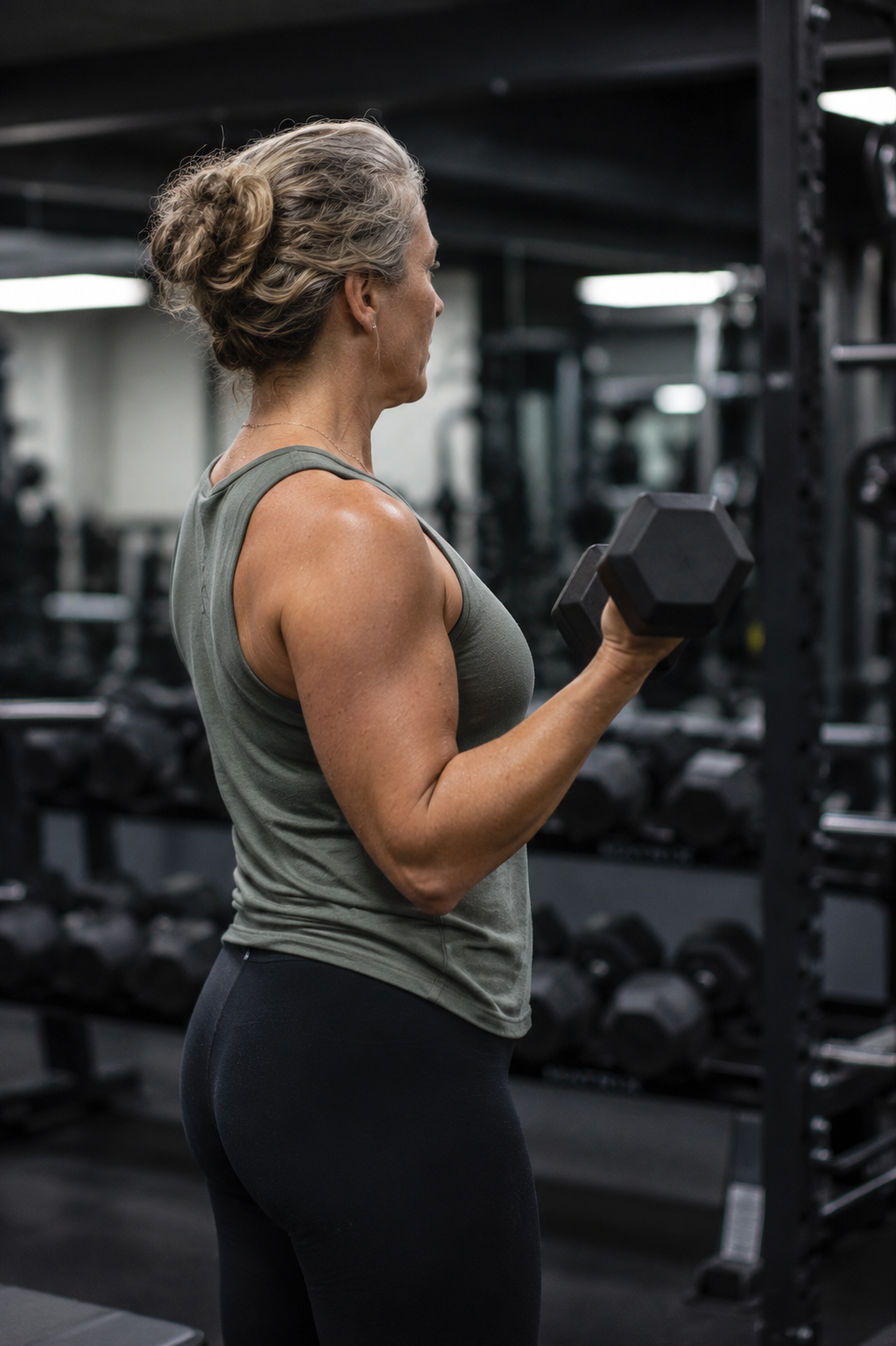
Why Strength Training Matters More Than Ever
From around age 40, women naturally begin to lose muscle mass at a rate of 3–8% per decade — a process that speeds up after menopause when estrogen levels fall.
This shift affects more than muscle tone: it influences metabolism, energy levels, posture, balance, and even mood.
The good news? Consistent strength training may help to reverses many of these changes. Research consistently shows that lifting weights, using resistance bands, or performing body-weight exercises improves muscle strength, insulin sensitivity, and overall metabolic health.
Beyond Aesthetics: Building Strength for Longevity & Confidence
Muscle is far more than a cosmetic feature — it’s metabolically active tissue that supports every system in your body.
More muscle means better blood-sugar control, stronger bones, improved mobility, and a more stable metabolism.
Whether you’re lifting a suitcase, running after kids, or simply wanting to move with ease and confidence, resistance training helps you stay capable, independent, and resilient.
Aerobic activity like walking or cycling remains vital for heart health — but the combination of cardio and strength training offers the greatest benefits for cardiovascular fitness, bone integrity, and healthy ageing.
Women, Menopause & Muscle Health
Hormonal shifts during the perimenopausal and post-menopausal years can lead to faster muscle and bone loss. Resistance training acts as a powerful countermeasure — helping to protect bone density, joint stability, and mood.
Regular sessions (two per week) may:
· Increase bone mineral density, reducing fracture risk
· Improve lean body mass, maintaining a healthy weight
· Support mood and brain health through myokines — beneficial compounds released by working muscles that enhance cognitive and emotional wellbeing
· Enhance balance and coordination, lowering the risk of falls
And here’s another key benefit:
Resistance training supports blood glucose regulation by increasing muscle mass — particularly in large muscle groups like the glutes and quadriceps — which serve as major sites for glucose uptake and storage. Building strength in these areas improves insulin sensitivity and helps stabilise blood-sugar levels throughout the day.
It’s never too late to start. Studies show that even women who begin training later in life experience significant improvements in strength, function, and vitality.

Getting Started Safely
If you’re considering starting strength training, seeking guidance from a qualified personal trainer, exercise physiologist, or physiotherapist can be incredibly valuable — particularly if you are new to resistance training, managing injuries, navigating perimenopause or menopause, or returning to exercise after a long break.
A qualified professional can help ensure your program is appropriate for your individual goals, health status, mobility, and experience level, while also supporting safe technique and sustainable progression. Finding an approach that feels supportive, realistic, and enjoyable is often one of the most important factors in building a routine that lasts.
Building a Routine That Lasts
Think of resistance training as a long-term investment in yourself — not a quick fix. The good news is that research suggests even two sessions per week can provide significant benefits for muscle strength, metabolic health, bone density, and overall wellbeing.
For many women, keeping strength training realistic, sustainable, and enjoyable is far more important than striving for perfection. Building a routine that feels manageable and supportive of your lifestyle is often what leads to long-term consistency.
For women navigating hormonal changes, joint pain, or fatigue, balancing resistance training with adequate rest, hydration, nutrition, and recovery is key. Sustainable progress will almost always outperform an overly intense approach that becomes difficult to maintain.
The Takeaway
Strength training isn’t about chasing perfection — it’s about staying strong, capable, and confident through every decade of life.
By building muscle, you’re supporting your metabolism, heart, bones, mood, and blood-glucose regulation — and investing in a body that carries you with strength and stability into the future.